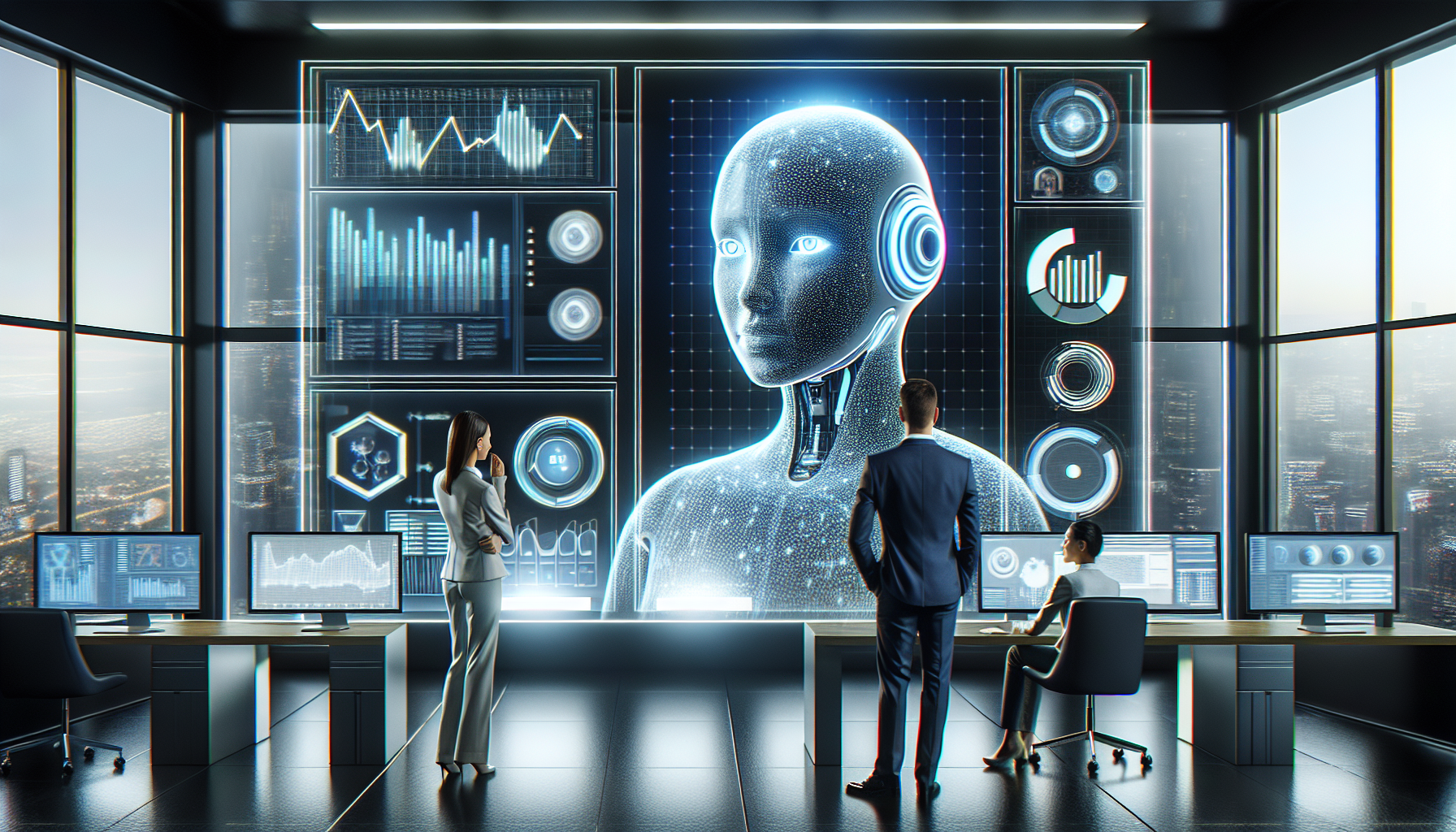
How AI Agents Are Revolutionizing Digital Marketing: A New Era of Personalization and Efficiency
In the ever-evolving world of digital marketing, AI agents are emerging as transformative tools. These intelligent applications promise to reshape our marketing landscapes by autonomously solving problems, enhancing personalization, and enabling next-generation strategies. If you’re keen on staying ahead of the curve in digital marketing, understanding the role and potential of AI agents is critical.
What are AI Agents, and Why are They a Game-Changer?
AI agents are more than just advanced chatbots. Think of them as your tireless digital assistants—they can process data and perform tasks independently to achieve specific marketing objectives. For instance, consider an AI agent that autonomously books flight tickets based on preferred criteria. Imagine scaling that functionality to handle multiple facets of digital marketing!
At their core, AI agents dissect complex issues into manageable pieces, craft step-by-step solutions, and refine their actions to perfect the outcomes. Such functionalities make them invaluable for tackling complicated and repetitive tasks within digital marketing.
The Agentic Framework: The Backbone of AI Efficiency
To harness AI agents effectively, embracing the agentic framework is key. This framework empowers developers to build intelligent agents capable of understanding instructions and autonomously taking action. Open-source platforms like Lang Graph epitomize this by facilitating the development of intelligent agents that can multitask and operate efficiently, even during simultaneous user interactions.
Imagine a scenario where your brand can offer personalized recommendations to thousands of customers concurrently without breaking a sweat—thanks to the agentic framework, that vision is increasingly achievable.
AI Agents vs. Chatbots: Understanding the Difference
While chatbots are familiar to most—offering automated responses to basic queries—AI agents take things several steps further. They don’t just answer questions; they autonomously make decisions and execute tasks aligned with specified marketing goals. Their capability to “act” and “think” revolutionizes digital marketing processes akin to transitioning from trench telephone lines to smartphones.
Why Businesses Need AI Agents
For businesses aiming to maintain a competitive edge in digital marketing, AI agents offer numerous advantages:
- Efficiency: Automate complex, repetitive tasks, freeing up human resources for strategic projects.
- Personalization: Deliver tailored content and experiences that resonate with specific audience segments.
- Scalability: Handle an expansive range of tasks and interact with countless consumers seamlessly.
Implementing AI Agents: A Nine-Step Guide
Developing AI agents isn’t a leap into the unknown without structure. Here’s a streamlined approach to integrate them into your digital marketing strategy:
- Define Use Cases: Identify key marketing challenges that AI agents should tackle.
- Manual Testing: Validate solutions with meticulous manual testing.
- Chaining Steps: Design effective sequences for agent actions.
- Select Agent Framework: Choose an agent framework fitting with your objectives.
- Contextual Training: Equip agents with contextual information for informed interactions.
- Reasoning and Decision-Making: Develop processes that support agent reasoning.
- Define Input Sources: Establish data inputs crucial for agent functionality.
- Learning Capabilities: Enable agents to improve through experience.
- Action Execution: Ensure executable decisions align with marketing goals.
The Future of AI in Digital Marketing
As AI continues to evolve, its role in digital marketing is set to expand even further. The future points towards an agent-driven economy where AI doesn’t just support marketing efforts but refines and directs them. By adopting AI agents and the agentic framework, marketers can anticipate enhanced resource allocation, leaving room for creative exploration.
Ultimately, AI agents signify more than just operational efficiency—they’re harbingers of a new age in brand-customer interaction, personalization, and digital growth. In an ever-expandable digital terrain, embracing AI advancements will be indispensable for reaching unprecedented marketing heights.
Conclusion
AI agents are not just tools of the future—they're tools of the now. By integrating AI agents and leveraging the agentic framework fully, digital marketers can unlock greater potential and remarkable growth. As the digital marketing landscape continues to evolve, ensuring your brand keeps pace with these technological advancements is crucial, and AI agents are indeed the allies you need for the journey ahead.